Summary
The key differences between AI BDRs and traditional BDRs include availability, scalability, consistency, lead qualification, and cost efficiency. By combining AI with human expertise, you can create a smarter, more effective business development process.
=========================================
In today’s competitive business world, speed, personalization, and consistency matter. Many businesses struggle to generate more qualified leads. That is why the debate between AI BDR and traditional BDR is increasingly relevant. Both of these can help you identify potential customers, but their way of operating is different.
In this guide, we will explore the key differences between them and how AI-driven business development is changing sales work. Let’s dive in!
AI BDR vs Traditional BDR: What are the Key Differences
Availability
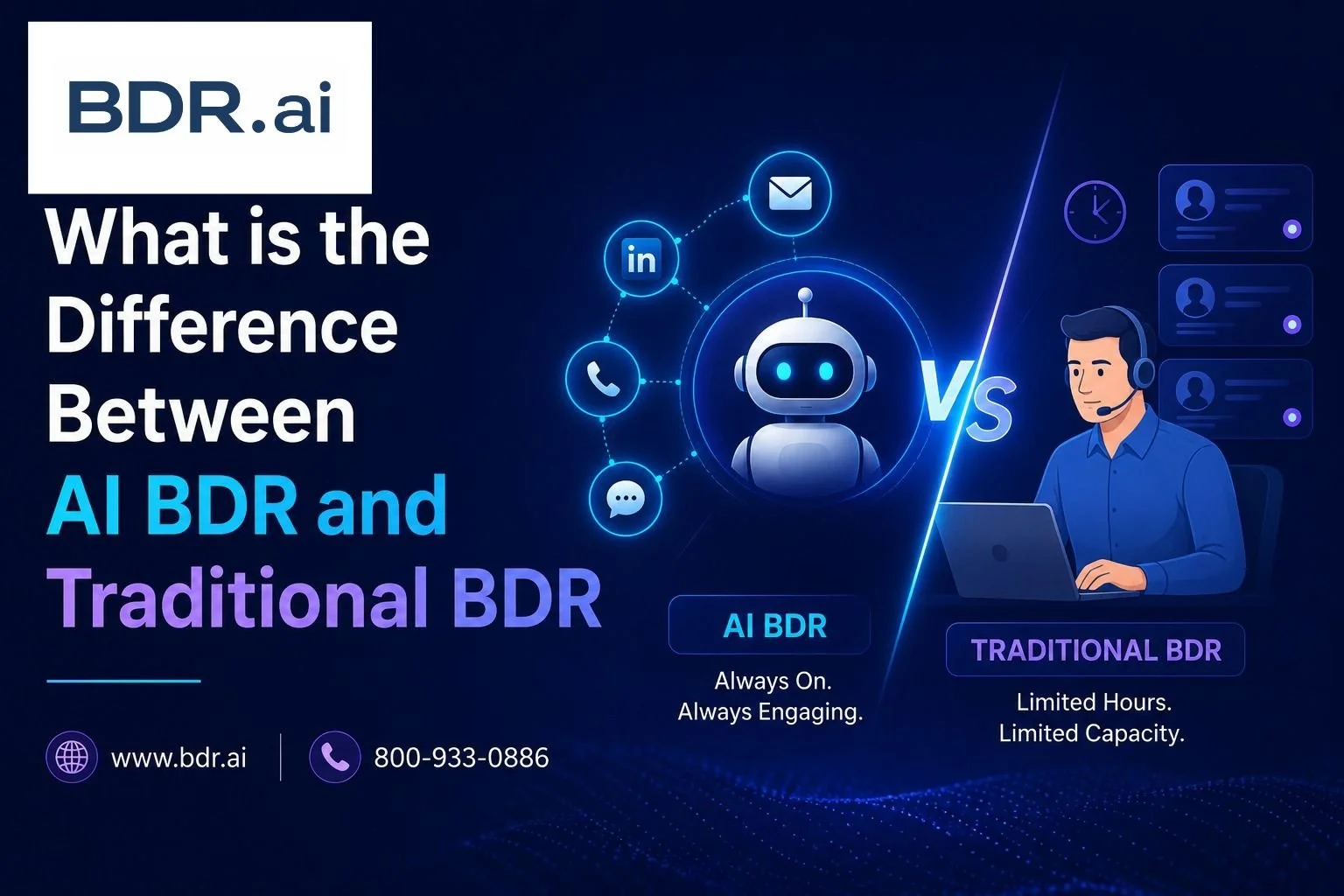
A traditional BDR only works during business hours. So, it can manage a limited number of conversations in a day. The result? It means it reduces the amount of time for active prospecting. On the other hand, AI software can work around the clock. It can engage website visitors, respond to inquiries, and qualify leads all the time.
Scalability
Traditional BDRs can handle a limited number of prospects at a time. When the lead volume increases, you need to hire additional team members. It can lead to increased recruitment, training, and operational costs. AI can manage thousands of conversations. Whether there are ten visitors or ten thousand, you can rest assured that every prospect receives immediate attention.
Consistency
Let’s be honest! Human performance can fluctuate due to various reasons, such as energy, motivation, and competing priorities. So, when sales representatives cannot work as expected, it can affect response times and follow-up consistency. An AI representative can deliver the same high-quality engagement every time. Your business can maintain a professional customer experience consistently.
Lead Qualification
Traditional BDRs need a significant amount of time to research prospects, ask qualifying questions, or update CRM records. You can automate the process with an AI BDR. It can engage prospects in natural conversations, gather information, and qualify leads. When the repetitive tasks are automated, your sales team can focus on building relationships and closing, rather than spending time on administrative work.
Businesses also benefit from the valuable insights that AI provides during the sales process. Every interaction is recorded and analyzed to identify customer interests, common questions, and buying intent. These insights help sales teams understand what prospects are looking for and improve future outreach strategies. AI can also prioritize high intent leads based on engagement, allowing BDRs to focus on the opportunities most likely to convert. Instead of relying on guesswork, sales teams can make data driven decisions that improve conversion rates, strengthen customer relationships, and create a more efficient and predictable sales pipeline over time.
Cost Efficiency
If you want to expand your traditional BDR team, you need to deal with hiring, onboarding, training, salaries, benefits, and ongoing management. These costs continue to rise. On the other hand, an AI representative can offer you a more efficient approach by handling repetitive prospecting and qualification tasks at scale. It reduces manual workload and improves productivity.
Final Thoughts
The future of business development is not about choosing between humans and AI. It is about combining the strengths of both. Together, they create a smarter sales process. For any queries, please contact us today.